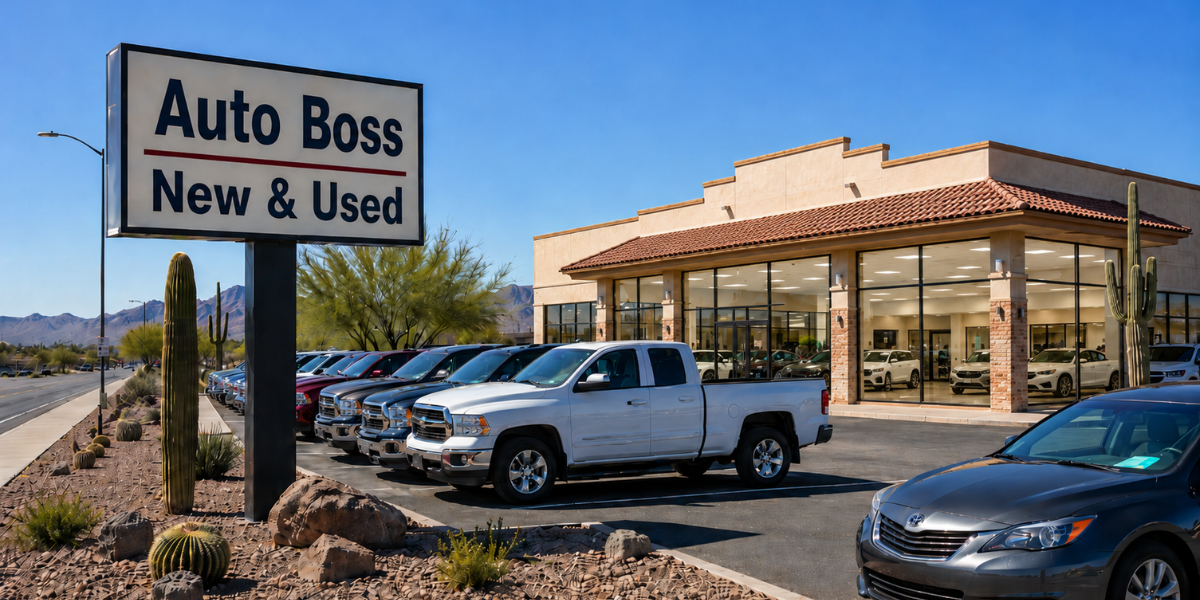
A Guide to Arizona Auto Dealer Bond Requirements
Surety Bonds Auto Dealer /On July 09, 2026

A Guide to Arizona Auto Dealer Bond Requirements

Back
A Guide to Arizona Auto Dealer Bond Requirements
Arizona auto dealers must meet strict licensing and bonding requirements to operate legally. This guide explains how Arizona motor vehicle dealer bonds work, who needs one, how bond amounts vary by license type, and what steps dealers should take to stay compliant and avoid penalties.

Listen to this post

A Guide to Arizona Auto Dealer Bond Requirements
5:32

Post Summary

What is an Arizona motor vehicle dealer bond and what does it protect against?
An Arizona motor vehicle dealer bond is a surety bond required for licensed auto dealers that protects consumers and the state from financial losses caused by fraud, misrepresentation, failure to properly transfer a vehicle title, failure to remit title or registration fees, or other violations of Arizona motor vehicle laws. If a valid claim is filed, the surety investigates and compensates the harmed party up to the bond amount, after which the dealer must reimburse the surety in full.
Who is required to carry an Arizona auto dealer bond?
Arizona requires surety bonds for most licensed motor vehicle dealer classifications, including new motor vehicle dealers, used motor vehicle dealers, wholesale motor vehicle dealers, wholesale auction dealers, public consignment auction dealers, and motor vehicle brokers. The required bond amount varies by license classification.
What bond amounts does Arizona require for motor vehicle dealers?
New and used motor vehicle dealers must obtain a $100,000 surety bond per Arizona Administrative Code section R17-5-402. Wholesale motor vehicle dealers, wholesale auction dealers, and motor vehicle brokers typically require a $25,000 bond. The correct bond amount is determined by the dealer's specific license classification.
What does the Arizona dealer bond cost and how is the premium set?
Dealers pay only a premium — a percentage of the required bond amount — rather than the full bond value upfront. Premium rates are based on the dealer's personal credit history, business financials, and industry experience. Dealers with strong credit and financial profiles qualify for lower rates.
What are the most common compliance mistakes Arizona auto dealers make?
Four mistakes appear most frequently: allowing the bond to lapse before renewal, which can jeopardize the dealer license; applying for the wrong dealer license classification, which results in carrying the wrong bond amount; submitting inaccurate business or bond documentation, which delays approvals and creates compliance risk; and overlooking regulatory updates from the Arizona Department of Transportation.
What happens if an Arizona dealer operates without a bond?
Dealers who fail to secure or maintain the required bond may face license denial, suspension, revocation, or other regulatory penalties from the Arizona Department of Transportation.
How can dealers obtain an Arizona auto dealer bond?
Arizona dealers can apply for a motor vehicle dealer bond through a licensed surety provider like BOSS Bonds. Our online application process is quick and easy.

How Arizona Auto Dealers Can Stay Compliant

Running a successful auto dealership in Arizona requires more than strong sales and a steady inventory of vehicles. As a dealer, you must also comply with state licensing rules and regulatory requirements.

One of the most important compliance requirements is obtaining the correct motor vehicle dealer bond. These surety bonds serve as a financial safeguard for consumers and help ensure dealers follow Arizona's motor vehicle laws.

Whether you're opening a new dealership or renewing your license, understanding Arizona’s dealer bond requirements can help you avoid costly delays, penalties, and licensing issues.

Why Compliance Matters for Arizona Auto Dealers

Arizona's motor vehicle industry is regulated by the Arizona Department of Transportation (ADOT). This agency establishes licensing and bonding requirements to protect consumers and promote fair business practices.

If you fail to meet the ADOT’s requirements, you may face serious consequences, including:

  • License suspension
  • Financial penalties
  • Legal action

Staying compliant isn't just about avoiding penalties. It's also essential for maintaining your dealership's reputation and long-term success.

What Is an Arizona Motor Vehicle Dealer Bond?

A motor vehicle dealer bond is a type of surety bond that ensures auto dealers follow state laws and operate ethically. If a dealer misrepresents a vehicle, fails to properly transfer a vehicle title, neglects required title or registration fees, or engages in fraudulent activity, affected parties can file a claim against the bond.

The surety provider will investigate the claim and pay valid claims up to the bond amount. The dealer is then responsible for reimbursing the surety in full.

Thanks to this structure, Arizona motor vehicle dealer bonds promote accountability while providing consumers with an added layer of financial protection.

Who Needs an Auto Dealer Bond in Arizona?

Arizona requires motor vehicle dealers to obtain the appropriate surety bond based on their dealer license classification. This generally includes:

  • New motor vehicle dealers
  • Used motor vehicle dealers
  • Wholesale motor vehicle dealers
  • Wholesale auction dealers
  • Public consignment auction dealers
  • Motor vehicle brokers

The required bond amount depends on your specific license classification.

Arizona Auto Dealer Bond Requirements

Arizona requires different motor vehicle dealer bond amounts depending on the type of dealer license you hold. Generally, new and used motor vehicle dealers must obtain a $100,000 surety bond, while wholesale motor vehicle dealers, wholesale auction dealers, and motor vehicle brokers typically require a $25,000 bond.

The good news? You don't need to pay the full bond amount upfront. Instead, you'll pay a premium based on your:

  • Personal credit history
  • Business financials
  • Industry experience

Dealers with strong credit and financial profiles typically qualify for lower premium rates.

If you're wondering how to get an Arizona auto dealer bond, the process typically involves submitting a short application and receiving a quote based on your credit and business profile. By working with a trusted surety provider like BOSS Bonds, you can secure the correct Arizona dealer license bond and complete your application with confidence.

Read More: The Ultimate Guide to Getting an Auto Dealer License and Staying Compliant

Common Compliance Mistakes for Arizona Auto Dealers

Running an auto dealership involves many responsibilities. As a result, it can be easy to overlook important compliance details.

Here are some of the most common mistakes Arizona auto dealers make:

  • Letting bonds lapse before renewal: A lapse in coverage can jeopardize your dealer license.
  • Applying for the wrong dealer license classification: Different license types require different bond amounts.
  • Submitting inaccurate business or bond documentation: Incorrect information can delay approvals and create compliance risks.
  • Overlooking new regulatory updates: Arizona’s regulations can change, so it’s important to stay informed.

Avoiding these mistakes can help you maintain compliance and keep your dealership running smoothly.

5 Tips to Help Arizona Auto Dealers Stay Compliant

To stay compliant as an Arizona auto dealer, follow these five best practices:

  1. Renew your license and bond on time.
  2. Maintain accurate records of all vehicle transactions.
  3. Properly transfer vehicle titles and remit applicable fees.
  4. Monitor regulatory updates from the ADOT.
  5. Partner with a reliable surety provider, like BOSS Bonds.

Streamline Your Surety Compliance with BOSS Bonds

Operating an auto dealership in Arizona requires strict adherence to state licensing and bonding requirements. Your motor vehicle dealer bond plays a key role in this process.

If you need an Arizona auto dealer bond, BOSS Bonds can help. Whether you need a $100,000 or $25,000 dealer bond, our team can guide you through our simple AZ motor vehicle dealer bond application and provide expert support every step of the way.

Sources:

Cornell Law School. Ariz. Admin. Code § R17-5-402 - Bond Amounts; Dealers, Brokers, and Automotive Recyclers' Business Licenses.

https://www.law.cornell.edu/regulations/arizona/Ariz-Admin-Code-SS-R17-5-402

Key Points

What is an Arizona motor vehicle dealer bond and how does the claim and reimbursement process work

  • An Arizona motor vehicle dealer bond is a surety bond that ensures licensed auto dealers follow state laws and operate ethically — it functions as a financial safeguard for consumers and the state, backing the dealer's obligation to comply with Arizona's motor vehicle regulations from the moment the license is active.
  • The bond covers a specific range of dealer violations — qualifying triggers include misrepresenting a vehicle's condition or history, failing to properly transfer a vehicle title, neglecting required title or registration fees, and engaging in fraudulent activity at any stage of the sales process.
  • Affected parties may file a claim against the bond when a qualifying violation causes financial harm — the surety provider investigates the claim before any payment is made, providing a structured review process rather than automatic disbursement on any complaint filed.
  • If the claim is validated, the surety compensates the harmed party up to the total bond amount — the bond amount represents the maximum the surety will pay across all valid claims, not a per-claim ceiling for each individual complaint.
  • The dealer is responsible for reimbursing the surety in full after any paid claim — the bond is not insurance for the dealer; it is a guarantee to the public, and the dealer bears the full financial cost of any claims paid on their behalf through the reimbursement obligation.
  • This three-party accountability structure promotes ongoing regulatory compliance — because violations carry a direct financial consequence traceable back to the dealer through the reimbursement obligation, the bond creates a continuous incentive for ethical and lawful business practices beyond the initial licensing requirement.

Who is required to obtain an Arizona auto dealer bond and how does license classification determine the requirement?

  • Arizona requires surety bonds for most licensed motor vehicle dealer classifications — the bonding requirement is broad and applies across the full range of standard commercial dealer operations rather than a narrow subset of license types.
  • New motor vehicle dealers and used motor vehicle dealers are subject to the bonding requirement — these are the two most common dealer classifications and both fall under the $100,000 bond requirement established by Arizona Administrative Code section R17-5-402.
  • Wholesale motor vehicle dealers, wholesale auction dealers, and motor vehicle brokers are also required to be bonded — these classifications carry a lower $25,000 bond requirement that reflects their transaction structure and consumer interaction profile.
  • Public consignment auction dealers are included in the bonding requirement — this classification covers dealers who sell vehicles on consignment at auction and must carry the appropriate bond amount for their specific license type.
  • License classification determines the correct bond amount — selecting the wrong license classification at the outset results in carrying the wrong bond amount, creating a compliance gap that can trigger regulatory action even when the dealer believes they are properly bonded.
  • Confirming the correct license classification before applying for the bond is a foundational compliance step — because the bond amount is a direct function of the license type, errors at the classification stage propagate through the entire licensing and bonding process.

What are Arizona's specific bond amounts by dealer license classification?

  • New and used motor vehicle dealers must obtain a $100,000 surety bond — this requirement is established under Arizona Administrative Code section R17-5-402 and applies uniformly to both new and used vehicle dealer license classifications.
  • Wholesale motor vehicle dealers, wholesale auction dealers, and motor vehicle brokers typically require a $25,000 bond — the lower threshold reflects the distinct transaction structure of these dealer types, which operate primarily with other licensed dealers rather than directly with retail consumers.
  • The bond amount is set by the state based on license classification and is not negotiable — it does not vary based on the dealer's sales volume, years in business, or financial profile; the classification governs the amount.
  • Dealers pay only a premium rather than the full bond amount upfront — the premium is a percentage of the required bond amount determined by the surety company based on the dealer's personal credit history, business financials, and industry experience.
  • Dealers with strong credit and financial profiles consistently qualify for lower premium rates — the inverse also applies: dealers with credit challenges or limited financial history pay higher premiums, though they are not automatically disqualified from obtaining the bond.
  • Working with a trusted surety provider like BOSS Bonds allows dealers to identify the correct bond amount for their classification and complete the application efficiently — the online application process is quick, and BOSS Bonds provides expert support to ensure dealers are bonded correctly from the outset.

What are the consequences of operating without a required bond in Arizona?

  • Dealers who fail to secure the required bond may face license denial from the Arizona Department of Transportation — without the bond in place, the ADOT will not issue the dealer license, meaning the dealer cannot operate legally until the bond is obtained.
  • License suspension is a consequence for dealers who allow an existing bond to lapse during the license period — a lapse removes the financial guarantee underpinning the license, and the ADOT may suspend the license until coverage is restored.
  • License revocation is a potential consequence for more serious or repeated non-compliance — revocation carries more severe reinstatement barriers than suspension and represents a significantly more damaging outcome for the dealership's long-term operations.
  • Financial penalties may be imposed on dealers operating without a valid bond — the ADOT has regulatory authority to levy fines against non-compliant dealers in addition to the license actions it can take.
  • Legal action is a further potential consequence — dealers operating as unlicensed or non-compliant operators expose the business to civil and potentially criminal liability that extends beyond the administrative penalties the ADOT can impose.
  • The reputational consequences of bond-related compliance failures extend beyond regulatory penalties — consumers, lenders, auction houses, and business partners who discover a dealer has operated without required bonding have grounds to question the dealer's reliability and compliance culture in ways that can outlast any regulatory action.

What are the most common compliance mistakes Arizona auto dealers make and how are they prevented?

  • Allowing the bond to lapse before renewal is the most consequential and most preventable mistake — a lapse in coverage can directly trigger license jeopardy, and dealers who do not track their bond expiration date separately from their license renewal date are at risk of missing one or both deadlines.
  • Applying for the wrong dealer license classification creates misaligned bond requirements from the outset — a new or used dealer who applies for a wholesale classification, or vice versa, carries the wrong bond amount and is out of compliance even if they believe they are properly bonded.
  • Submitting inaccurate business or bond documentation is a specific and frequent source of delay — mismatched business names, incorrect addresses, or bond details that do not align with licensing records create compliance flags that require correction before approvals can proceed.
  • Overlooking regulatory updates from the ADOT leaves dealers operating under potentially outdated requirements — Arizona's motor vehicle regulations and bonding rules can change, and dealers who do not actively monitor ADOT communications may find themselves non-compliant without awareness.
  • Each of these mistakes is preventable with consistent compliance infrastructure — a renewal calendar, correct license classification confirmed at the outset, meticulous documentation accuracy, and periodic review of ADOT communications address all four failure points before they become problems.
  • Partnering with a reliable surety provider like BOSS Bonds adds an external compliance checkpoint — BOSS Bonds tracks bond expiration dates, confirms correct license classification before bonding, and provides proactive support that helps dealers stay compliant between renewal cycles.

What five best practices help Arizona auto dealers maintain ongoing compliance?

  • Renewing both the dealer license and the surety bond on time is the foundational compliance practice — dealers should build renewal reminders into their business calendar well in advance of expiration to allow time for documentation review and any complications that arise during the renewal process.
  • Maintaining accurate records of all vehicle transactions protects the dealer in any regulatory review or claims situation — thorough documentation of purchases, sales, title transfers, and fee remittances provides the evidentiary foundation that the ADOT and surety providers rely on when evaluating compliance.
  • Properly transferring vehicle titles and remitting all applicable fees keeps the dealership aligned with the specific regulatory standards the bond is designed to enforce — title transfer failures and fee remittance violations are among the most common triggers for bond claims, so compliance with these specific obligations simultaneously fulfills a consumer protection duty and preserves the dealer's bond standing.
  • Monitoring regulatory updates from the Arizona Department of Transportation ensures the dealer is operating under current requirements — licensing and bonding rules, documentation standards, and fee schedules can change, and dealers who stay informed adapt before any change creates a compliance gap.
  • Partnering with a reliable surety provider like BOSS Bonds simplifies the bond management component of compliance — BOSS Bonds confirms the correct bond type and amount for a given license classification, manages the renewal process proactively, and provides expert guidance when regulatory or documentation questions arise between renewal dates.
  • Together these five practices create a compliance posture that protects the dealership's license, reputation, and long-term operating stability — the cost of maintaining compliance is modest compared to the financial and reputational cost of the penalties, suspensions, and claims that follow from non-compliance.

What's the next best step?

Apply for the appropriate Arizona auto dealer bond with BOSS Bonds to stay compliant and keep your dealership operating smoothly.

Get latest articles directly in your inbox, stay up to date